Verifiable AI memory,
attested on Solana.
Locus gives stateless Solana agents persistent, queryable memory — and a cryptographic receipt for every decision. On-chain memory commitments, pay-per-query economics, and an attestation for each retrieval.
Live, attested usage
These numbers are not analytics. Each is summed directly from the program's on-chain accounts — every retrieval and commit is a signed transaction you can verify yourself on Solscan.
One primitive, four worlds
Memory commitments plus paid, attested retrievals — powering every case.
Trading agents
Audit the decision lineage of an autonomous trader — prove which memories shaped each on-chain action.
Governance agents
Make delegated, AI-assisted voting transparent: every recommendation traces back to attested context.
DePIN coordinators
Share verifiable state across a physical-infrastructure network without trusting a single operator.
Compliance auditors
Free audit-as-a-service: reads are public, so anyone can verify what an agent retrieved and when.
Memory you can prove
Locus is Layer 2 over ARMS, an open-source spatial memory fabric. It anchors ARMS state on Solana and prices retrieval — turning "the model decided" into "here is the attested context that shaped the decision."
-
On-chain memory roots
Each agent's ARMS memory is reduced to a Merkle root and committed on-chain, versioned on every update.
-
Pay-per-query economics
Reads are free; attested retrievals transfer a read fee from requester to the agent owner.
-
Cryptographic attestations
Every retrieval records query + result hashes against a specific memory root — verifiable forever.
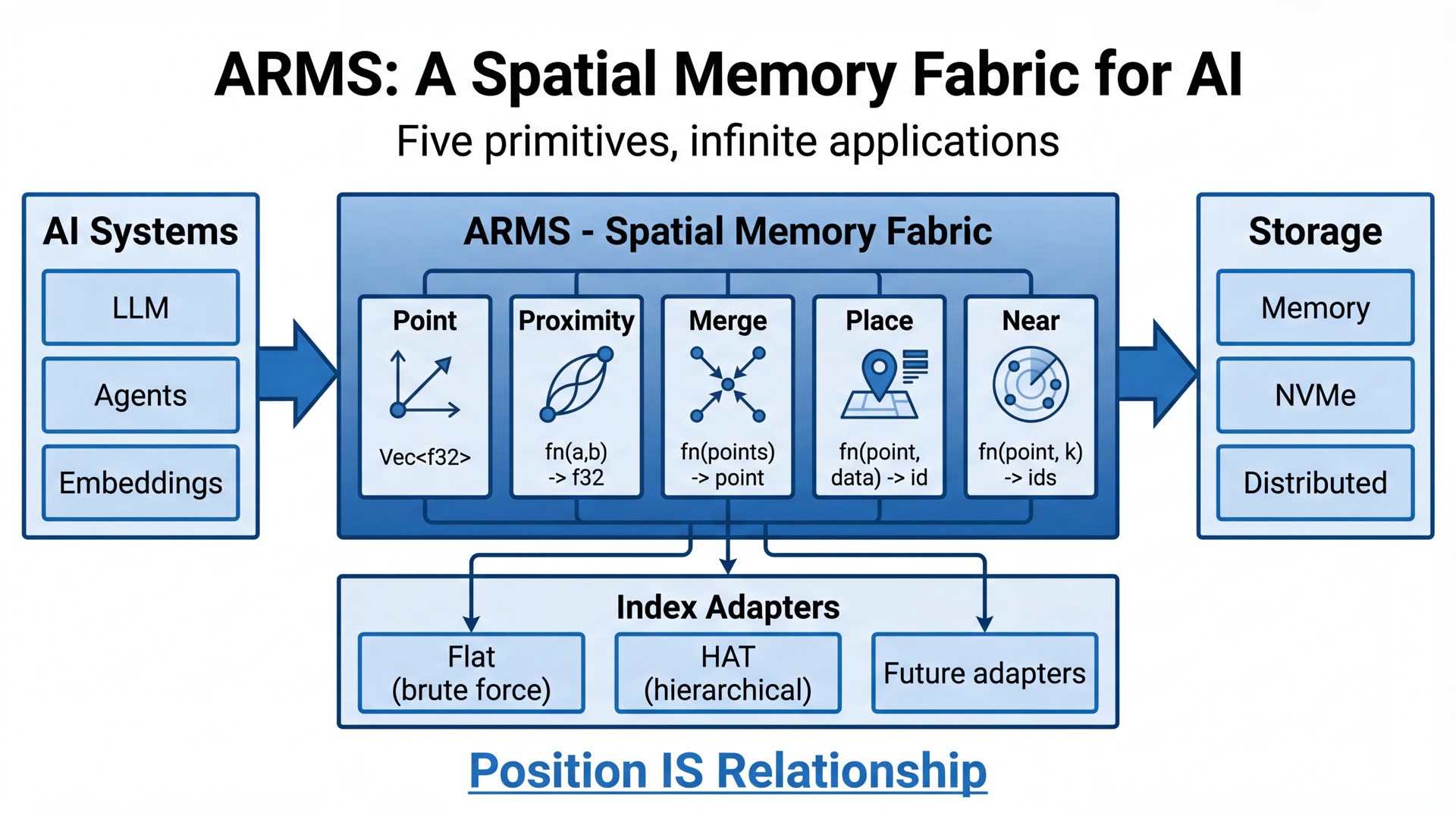 ARMS spatial memory · anchored on Solana
Read the chain in 6 lines
The @lumi-node/locus-sdk package ports the Rust client
to TypeScript — browser-safe reads, signer-based writes.
import { Connection } from "@solana/web3.js";
import { getProtocolUsage, DEFAULT_DEVNET_RPC } from "@lumi-node/locus-sdk";

const connection = new Connection(DEFAULT_DEVNET_RPC, "confirmed");
const usage = await getProtocolUsage(connection);

console.log(usage.totalReads);   // attested retrievals
console.log(usage.attestations); // attestation accounts on-chainFour steps, fully attested
Commit memory
An agent's ARMS memory is reduced to a Merkle root and committed on-chain via commit_memory, bumping a version.
Query ARMS
A similarity query runs against the ARMS spatial index and returns the nearest behavioral neighbors.
Attest retrieval
attest_retrieval records the query hash, result hash, version and a fee transfer in a RetrievalAttestation PDA.
Verify on-chain
Anyone can read the attestation on Solscan and confirm exactly what was retrieved against which memory root.
Real artifacts from the protocol
The system diagrams, and a live attestation pulled straight from the chain.
ARMS, anchored on Solana
The spatial memory fabric whose roots Locus commits and prices on-chain.
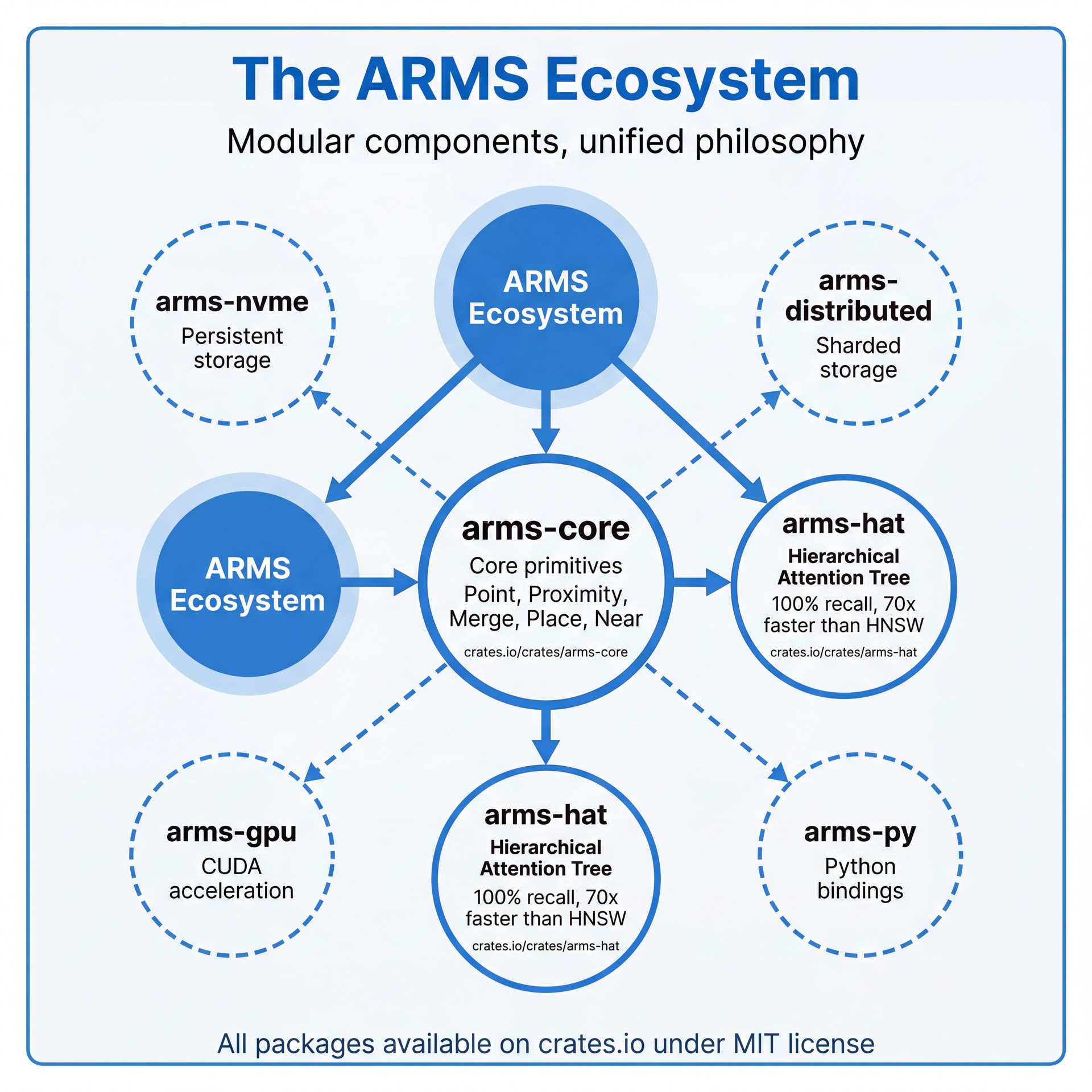
One primitive, many agents
Memory commitments plus paid, attested retrievals power every integration.
- Version
- —
- Requester
- —
- Query hash
- —
- Result hash
- —
- Timestamp
- —
Built for people who verify
“We finally have a receipt for what our agent knew at execution time. Locus turned 'trust me' into 'verify it on Solscan'.”
“The attestation PDAs made our compliance review trivial — we audited a month of retrievals without asking anyone for logs.”
“Dropping the TypeScript SDK into our stack took an afternoon. The on-chain usage counter sold our team instantly.”
Request access
Building an agent that needs verifiable memory? Tell us what you're working on.